NU FAIRVIEW
School of Engineering and Technology
Bachelor of Science in Information Technology
Specialization in Mobile and Internet Technology

SAFEWATCH: AN AI-ENABLED CCTV MONITORING, INCIDENT RESPONSE, AND PUBLIC ANNOUNCEMENT SYSTEM FOR BARANGAY HOLY SPIRIT
“Good ideas get to work.”
Midterm Documentation Submitted in Partial Fulfillment
of the Requirements for Technopreneurship (TENTREP)
By:
Andam, John Carlo D.
Baconawa, Cyrus Jeshurun Jacob M.
Dela Pena, Merl Angelo S.
Ilio, Benedict L.
Sanchez, Denver D.
Adviser: John Rey P. Radoc
Subject Teacher: Herminiño C. Lagunzad
Academic Year 2026-2027
TABLE OF CONTENTS
Chapter 1. Startup Branding 1
Chapter 1. Startup Branding
1.1 Company Name
The official name of the startup is Obsidian IT Solutions. The word “Obsidian” refers to a naturally formed volcanic glass recognized for its strength, sharpness and distinctive dark color. These qualities reflect the company’s commitment to developing precise, resilient, and dependable technology solutions. The term “IT Solutions” communicates the company’s broader purpose of designing systems that respond to practical organizational and community needs.
Obsidian IT Solutions is the company behind SafeWatch, its flagship project. SafeWatch is an AI-enabled, audio-assisted CCTV monitoring and incident response system designed initially for Barangay Holy Spirit. This distinction establishes Obsidian IT Solutions as the startup and SafeWatch as a technology solution developed under its brand. The company name is sufficiently broad to accommodate the future development of web, mobile, artificial intelligence, data management, and community-oriented technology solutions beyond the SafeWatch project.
1.2 Company Logo
The Obsidian IT Solutions logo serves as the primary visual identity of the company. Its design combines a faceted obsidian shield, a gold camera-aperture symbol, a bold geometric wordmark, and the tagline “Good ideas get to work.” Together, these elements represent technological strength, intelligent observation, responsible protection, and the company’s commitment to creating solutions with practical value.
Figure 1. SafeWatch Official Logo Design
Meaning of the Logo
The logo combines a faceted obsidian shield with a gold camera-aperture symbol to represent the identity and purpose of Obsidian IT Solutions. The shield symbolizes protection, resilience, operational security, and the company’s responsibility to safeguard the people, information, and organizations supported by its systems, while its angular facets reflect the strength and distinctive appearance of an obsidian. At its center, the camera aperture represents SafeWatch, the company’s flagship project, as well as CCTV monitoring, computer vision, situational awareness, and AI-assisted incident detection. Together, these elements communicate that Obsidian IT Solutions uses intelligent technology to support protection, responsible decision-making, and authorized human control while maintaining a corporate identity suitable for future IT solutions.
Color Psychology
Obsidian Black and Gray: Obsidian Black and Gray: Reflect the natural dark appearance of obsidian and give the brand a bold, modern, and distinctive visual identity.
Gold: Creates a strong contrast with the darker colors and draws attention to the camera-aperture symbol, emphasizing it as the logo’s focal point.
White: Improves readability and provides a clean visual balance against the darker elements.
Symbolism
Faceted Obsidian Shield: Represents protection, resilience, operational security, and the technical strength of Obsidian IT Solutions.
Camera Aperture: Represents SafeWatch, CCTV monitoring, vision, AI-assisted detection, and situational awareness.
Geometric Facets: Represents the different technologies, processes, and professional disciplines working together to create one dependable solution.
Bold Wordmark and Balanced Composition: Communicate confidence, reliability, and modern engineering.
1.3 Tagline
“Good ideas get to work.”
The tagline expresses Obsidian IT Solutions’ commitment to turning useful ideas into practical technology. “Good ideas” refers to recognizing real needs and designing thoughtful ways to address them. “Get to work” emphasizes developing solutions that people can use to carry out their responsibilities.
SafeWatch reflects this approach by helping barangay personnel detect incidents and coordinate responses. The tagline also remains broad enough to represent future projects developed by Obsidian IT Solutions.
1.4 Vision
To become a trusted IT solutions company known for building smart, secure, and reliable technologies that help organizations work better and serve their communities with confidence.
1.5 Mission
Obsidian IT Solutions designs and develops practical information-technology solutions that combine artificial intelligence, web and mobile technologies, secure data management, and human-centered workflows. Through SafeWatch and future projects, the company seeks to improve situational awareness, operational coordination, accountability, and community service while protecting data, preserving authorized human control, and building on the systems and resources already available to its clients.
1.6 Core Values
Vision: Identifying real-world needs and creating forward-looking technology solutions that are purposeful, adaptable, and capable of producing long-term benefits.
Vigilance: Maintaining awareness, preparedness, responsibility, and careful attention to system performance, operational risks, data protection, and situations requiring authorized human review.
Value: Delivering reliable, accountable, and sustainable solutions that improve operations, support users, make responsible use of existing resources, and contribute positively to the community.
Chapter 2. Project Overview
SafeWatch is an AI-enabled CCTV monitoring and incident-response system for Barangay Holy Spirit. It will analyze CCTV feeds, generate AI detections and recommended threat levels, support incident verification, facilitate the existing manual dispatch workflow, provide time-based automatic dispatch for unattended detections, monitor authorized responder locations, collect incident statements and formal reports, and prepare localized emergency announcements for confirmed incidents.
SafeWatch will combine decision support with a limited, rule-based automatic-dispatch function. Artificial intelligence will not independently verify incidents or activate public speakers. When an alert is noticed within the configured period, the Command Center Personnel may verify and forward the incident to the appropriate Purok Leader, the Purok Leader may dispatch Barangay Tanods, and the Command Center Personnel may dispatch the Barangay Task Force when necessary. When an alert is not noticed within the configured period, SafeWatch will automatically dispatch the nearest and appropriate Barangay Tanods or Task Force for Level 1, Level 2, and Level 3 detections. Public announcements will remain separate from responder dispatch and will require Command Center verification and authorization.
2.1 Problem
Barangay Holy Spirit faces challenges in monitoring its CCTV network of approximately 200 cameras. Continuous manual observation makes it difficult to maintain equal attention across all feeds, especially during simultaneous incidents, shift transitions, and busy periods. This may delay the recognition of physical altercations, prolonged loitering, curfew-related situations, fire, or smoke.
Incident details, responder coordination, location tracking, status updates, and reports may also be handled through separate processes. This reduces efficiency and makes it harder to maintain complete and consistent incident records. An AI detection may also remain unnoticed when Command Center personnel are handling several monitoring and coordination duties at the same time. A structured system is needed to notify the Command Center, provide a configurable period for personnel to act, initiate the appropriate fallback dispatch when an alert remains unattended, and support tracking and reporting.
The barangay also requires controlled public emergency announcements. Localized announcements must remain subject to human verification and authorization to prevent unverified AI detections from triggering unnecessary broadcasts. SafeWatch must support these functions without replacing the barangay's existing CCTV and public-address systems.
2.2 Solution
SafeWatch enhances the barangay's existing CCTV infrastructure through an AI-enabled application layer, rather than replacing current systems. CCTV camera feeds are analyzed for configured incident categories, and detected events generate alerts with a recommended threat level: Level 1 Advisory, Level 2 Priority, or Level 3 Critical.
The Command Center Personnel PC application supports alert review, incident verification, threat classification, forwarding verified incidents to the appropriate Purok Leader, manual dispatch actions, and monitoring of automatic-dispatch status. When an alert is noticed within the configured period, Purok Leaders may dispatch recommended Barangay Tanods and the Command Center may separately dispatch Barangay Task Force members when needed. When an alert remains unnoticed, SafeWatch automatically dispatches the nearest and appropriate Barangay Tanods or Task Force for Level 1, Level 2, and Level 3 detections
The mobile applications support responder GPS tracking, dispatch information, status updates, incident statements, and formal reporting based on user role. The IT Department Administrator PC application manages accounts, roles, cameras, locations, curfew schedules, detection categories, speaker units, settings, and connectivity.
For confirmed fire incidents, SafeWatch prepares a localized prerecorded announcement for Command Center authorization. A centralized backend and database manage detections, incidents, dispatches, GPS records, reports, and announcement activity.
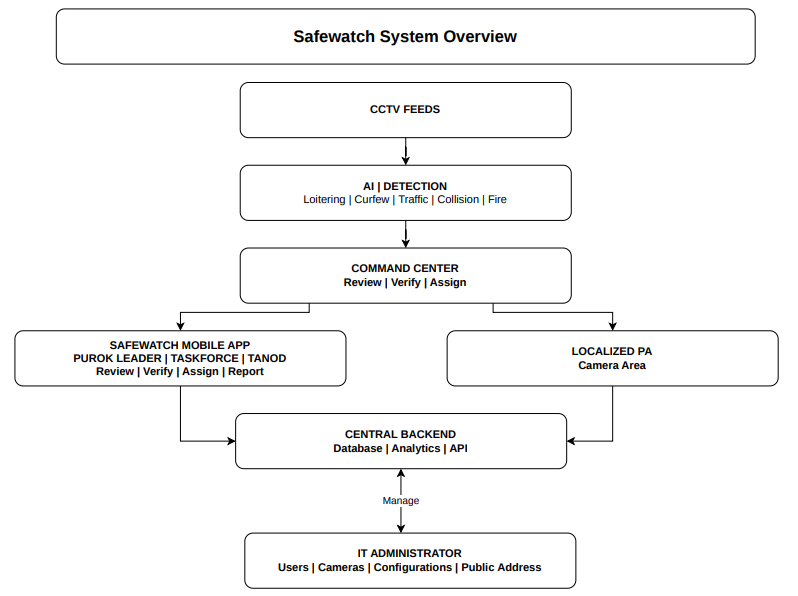
Figure 2. SafeWatch End-to-End System Architecture
2.3 Target Users
Primary Users – Command Center Personnel: Review CCTV feeds and AI detections, verify incidents, finalize threat levels, forward verified incidents to Purok Leaders, perform authorized manual dispatch actions, monitor manual and automatic responses, and authorize localized fire announcements.
Primary Users – IT Department Administrators: Manage authorized accounts, roles, cameras, locations, curfew schedules, detection categories, speaker units, approved recordings, system settings, connectivity status, and the configurable automatic-dispatch period.
Primary Users – Purok Leaders: Share authorized on-duty GPS location, review verified incidents forwarded by the Command Center, dispatch recommended Barangay Tanods, review Tanod incident statements, and prepare formal incident reports.
Primary Users – Barangay Tanods: Share authorized GPS location, receive manual or automatic dispatch assignments, view incident details and maps, update response status, and submit incident statements with supporting photos.
Primary Users – Barangay Task Force Members: Receive manual or automatic Command Center dispatch assignments, view incident information, share authorized GPS and response status, and submit formal incident reports.
Chapter 3. Innovation
3.1 Innovation Statement
SafeWatch introduces an AI-enabled CCTV monitoring and incident-response system that supports Barangay Holy Spirit’s existing public-safety operations. It combines CCTV camera feed AI detection, three-level threat recommendations, human verification, manual and time-based automatic dispatch, GPS monitoring, structured reporting, and localized fire announcements into one controlled workflow.
Unlike systems focused only on CCTV viewing or automatic detection, SafeWatch is designed around the barangay’s actual response structure. The Command Center Personnel may verify and forward incidents, Purok Leaders may manually dispatch Barangay Tanods, and the Command Center may manually dispatch Barangay Task Force members. If an AI detection is not noticed within the configured period, the system applies the approved threat-level mapping and automatically dispatches Barangay Tanods for Levels 1 and 2 or Barangay Task Force members for Level 3.
Its main innovation is the combination of AI decision support with a limited, rule-based fallback dispatch. Incident verification, final threat classification, manual dispatch actions, and public announcements remain associated with authorized roles, while unattended detections follow the configured period and approved automatic-dispatch mapping. Public announcements remain separate and always require Command Center verification and authorization.
3.2 Design Thinking Summary
Empathize
The team reviewed Barangay Holy Spirit’s current operating environment, including its CCTV network, responder coordination, and public-address capabilities. The review considered how Command Center Personnel, IT Department Administrators, Purok Leaders, Barangay Tanods, and Barangay Task Force members support monitoring and incident response.
Define
Findings: Approximately 200 CCTV cameras require continuous monitoring, making it difficult to maintain equal attention across all feeds. Incident details, responder updates, and reports may also be handled through separate processes, reducing efficiency and traceability.
Problem Statement: Barangay Holy Spirit requires a controlled decision-support system that can identify possible incidents, provide a threat-based dispatch for unattended alerts, maintain incident records, and assist with localized public announcement under Command Center authorization.
Ideate
The team considered approaches such as increasing monitoring personnel, using stand-alone detection systems, deploying a GPS-only responder application, or replacing existing platforms with a centralized system. The selected approach was a modular application layer combining AI-assisted detection, human verification, a configurable response period, manual and time-based automatic dispatch, GPS monitoring, structured reporting, and controlled audio announcements while preserving the barangay’s existing infrastructure.
Project
The planned prototype consists of Command Center Personnel and IT Department Administrator PC applications; mobile applications for Purok Leaders, Barangay Tanods, and Barangay Task Force members; an AI detection module; configurable waiting-period and automatic-dispatch processing; GPS and mapping services; notifications; reporting functions; and a centralized backend and database.
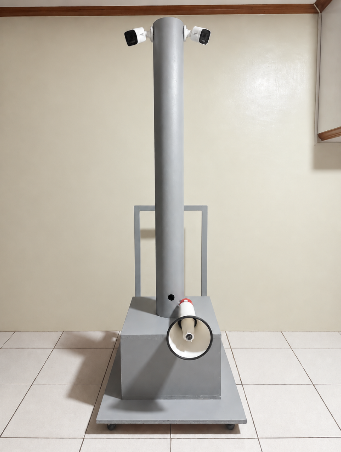
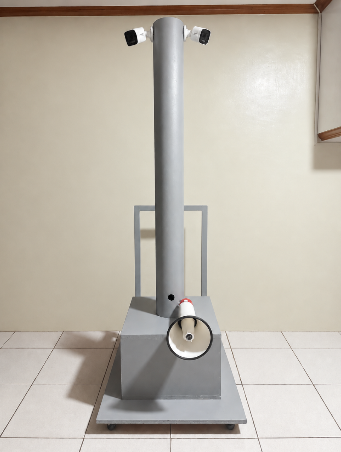
Figure 3. SafeWatch Functional Prototype
Test - Planned Validation
Controlled testing will evaluate authentication, role permissions, AI detection, incident verification, threat-level modification, the configurable response period, manual and automatic dispatch, GPS updates, notifications, status changes, reporting, and the separation of responder dispatch from public announcements. Simulated noticed and unattended incidents will also be used to identify false positives, missed detections, timing errors, permission errors, camera compatibility issues, and performance limitations before prototype acceptance.
3.3 Proposed Innovative Features
Table 1. Proposed Innovative Features Matrix
| Feature | Description | Benefit to Users |
|---|---|---|
| AI-Enabled, Audio-Assisted Incident Detection | Analyzes CCTV camera feeds for configured categories such as fighting or aggressive behavior, prolonged loitering, curfew-related situations, fire, and significant smoke. | Supports consistent prioritization, Command Center review, and the approved responder mapping when an alert remains unattended. |
| Three-Level Threat Recommendation | Recommends Level 1 Advisory, Level 2 Priority, or Level 3 Critical for detected incidents. | Supports consistent prioritization while allowing the Command Center Personnel to verify the incident and finalize the threat level. |
| Controlled Manual and Automatic Dispatch | Allows authorized personnel to use the regular manual workflow during the configured period and initiates threat-based automatic dispatch when an alert remains unnoticed. | Prevents an unattended alert from remaining without a dispatch while preserving authorized manual actions and separate speaker control. |
| GPS-Enabled Responder Coordination | Displays authorized responder locations and availability and supports recommendations based on proximity and active assignments. | Supports manual responder selection and the nearest-appropriate-responder logic used by automatic dispatch. |
| Mandatory Mobile Dispatch Reporting | Requires Barangay Tanods to submit incident statements and supporting photos, while Purok Leaders and Barangay Task Force members prepare applicable formal reports. | Improves completeness, accountability, and traceability of incident records. |
| Localized Fire Announcement Workflow | Prepares prerecorded messages and the appropriate speaker zone for confirmed fire incidents, subject to Command Center authorization. | Provides targeted warnings while reducing unnecessary broadcasts to unaffected areas. |
| Central Incident Timeline | Stores detections, configured-period application, verification decisions, manual or automatic dispatch assignments, GPS updates, response statuses, incident statements, formal reports, and announcement activity. | Provides a complete incident history for monitoring, accountability, reporting, and review. |
3.4 Innovation Value
Customer Value: Provides Barangay personnel with a structured workflow for reviewing AI detections, applying a defined fallback dispatch when an alert remains unattended, coordinating responders, and maintaining complete records. Barangay Tanods and Barangay Task Force members receive the applicable dispatch details, maps, status controls, and reporting requirements through the mobile application.
Social Value: Supports earlier awareness of public-safety incidents and a defined response to unattended alerts while preserving human judgment for verification, manual actions, and public-announcement authorization.
Operational Value: Connects detections, the configurable response period, verification, manual and automatic dispatch, GPS updates, response statuses, reports, and separately authorized announcements within a centralized workflow.
Economic Value: Builds on the barangay’s existing CCTV, network, and public-address infrastructure instead of replacing functioning systems. The prototype also allows evaluation before wider deployment and investment.
Competitive Value: Combines AI-assisted detection, three-level threat recommendations, authorized manual response, threat-based automatic dispatch for unattended alerts, GPS-supported responder coordination, structured reporting, and localized emergency announcements in a modular system designed for barangay operations.
Chapter 4. Startup Opportunity Analysis
4.1 Startup Readiness Assessment
Rating Scale
Table 2. Assessment Rating Scale
| Rating | Interpretation |
|---|---|
| 5 | Excellent / Strongly Agree |
| 4 | Good / Agree |
| 3 | Fair / Neutral |
| 2 | Needs Improvement |
| 1 | Poor / Strongly Disagree |
Assessment Criteria
Table 3. Startup Readiness Assessment Criteria
| Assessment Criteria | Description |
|---|---|
| Problem-Solution Fit | Evaluates whether SafeWatch directly addresses the identified challenges in CCTV monitoring, incident coordination, reporting, and emergency communication. |
| Market Demand | Assesses whether Barangay Holy Spirit and other potential public-safety users demonstrate sufficient need and interest in the proposed solution. |
| Innovation | Evaluates how SafeWatch improves existing approaches through AI-assisted detection, authorized manual response, time-based automatic dispatch, GPS coordination, structured reporting, and localized announcements. |
| Technical Feasibility | Determines whether the required technology, existing infrastructure, development tools, and computing resources can support the prototype. |
| Team Capability | Assesses whether the project team has the skills, coordination, and resources needed to design, develop, test, and complete the prototype. |
Individual Assessment Forms
Evaluator 1: Andam, John Carlo D.
Table 4. Individual Assessment Form - Andam, John Carlo D.
| Assessment Criteria | Rating (1-5) | Remarks / Justification |
|---|---|---|
| Problem-Solution Fit | 5 | Addresses the verified burden of monitoring approximately 200 CCTV feeds. |
| Market Demand | 4 | LGUs with existing camera networks need more structured monitoring and response workflows. |
| Innovation | 5 | Combines AI detection, human verification, GPS response, and localized alerts. |
| Technical Feasibility | 4 | Core tools are available, but multi-camera AI performance requires careful testing. |
| Team Capability | 5 | Strong project coordination and system-planning capability. |
Evaluator 2: Baconawa, Cyrus Jeshurun Jacob M.
Table 5. Individual Assessment Form - Baconawa, Cyrus Jeshurun Jacob M.
| Assessment Criteria | Rating (1-5) | Remarks / Justification |
|---|---|---|
| Problem-Solution Fit | 5 | Improves delayed recognition and fragmented incident coordination. |
| Market Demand | 5 | Barangays can upgrade existing CCTV investments without replacing all infrastructure. |
| Innovation | 4 | Integrates established technologies into a focused barangay response workflow. |
| Technical Feasibility | 4 | The project is feasible through selected feeds and phased integration. |
| Team Capability | 4 | The team has relevant web, mobile, database, and documentation skills. |
Evaluator 3: Dela Pena, Merl Angelo S.
Table 6. Individual Assessment Form - Dela Pena, Merl Angelo S.
| Assessment Criteria | Rating (1-5) | Remarks / Justification |
|---|---|---|
| Problem-Solution Fit | 4 | Targets clear operational problems while requiring controlled requirements and testing. |
| Market Demand | 4 | Demand is promising, although adoption depends on LGU budgets and approvals. |
| Innovation | 5 | Human-in-the-loop alerts and mandatory evidence reporting provide clear differentiation. |
| Technical Feasibility | 5 | A modular architecture supports controlled prototyping without replacing existing systems. |
| Team Capability | 5 | The team can support testing, quality assurance, documentation, and integration. |
Evaluator 4: Ilio, Benedict L.
Table 7. Individual Assessment Form - Ilio, Benedict L.
| Assessment Criteria | Rating (1-5) | Remarks / Justification |
|---|---|---|
| Problem-Solution Fit | 5 | Assists operators who divide attention across CCTV and dispatch duties. |
| Market Demand | 5 | Barangay Holy Spirit already has a large CCTV network suitable for enhancement. |
| Innovation | 5 | Threat recommendations, GPS coordination, and controlled audio form a complete workflow. |
| Technical Feasibility | 4 | AI accuracy, audio compatibility, and network performance remain manageable prototype risks. |
| Team Capability | 5 | The team demonstrates commitment to full-stack development and project management. |
Evaluator 5: Sanchez, Denver D.
Table 8. Individual Assessment Form - Sanchez, Denver D.
| Assessment Criteria | Rating (1-5) | Remarks / Justification |
|---|---|---|
| Problem-Solution Fit | 5 | Improves accountability through timestamps, assignments, GPS records, and dispatch reporting. |
| Market Demand | 4 | Other barangays may adopt the system after a successful pilot and technical validation. |
| Innovation | 4 | Uses practical technologies in a locally tailored public-safety application. |
| Technical Feasibility | 5 | Existing cameras, networks, and open-source AI tools reduce prototype barriers. |
| Team Capability | 4 | Agile collaboration and divided technical roles support the three-month schedule. |
Group Summary
Table 9. Startup Readiness Assessment - Group Summary
| Assessment Criteria | Member 1 | Member 2 | Member 3 | Member 4 | Member 5 | Average |
|---|---|---|---|---|---|---|
| Problem- Solution Fit | 5 | 5 | 4 | 5 | 5 | 4.80 |
| Market Demand | 4 | 5 | 4 | 5 | 4 | 4.40 |
| Innovation | 5 | 4 | 5 | 5 | 4 | 4.60 |
| Technical Feasibility | 4 | 4 | 5 | 4 | 5 | 4.40 |
| Team Capability | 5 | 4 | 5 | 5 | 4 | 4.60 |
| Overall Readiness | 4.60 | 4.40 | 4.60 | 4.80 | 4.4 | 4.56 |
Rating Interpretation
Table 10. Group Readiness Rating Summary
| Average Score | Interpretation |
|---|---|
| 4.50 - 5.00 | Highly Ready |
| 3.50 - 4.49 | Ready with Minor Improvements |
| 2.50 - 3.49 | Needs Further Developments |
| Below 2.50 | Not Yet Ready |
Analysis
The group evaluation produced an overall readiness score of 4.56, placing SafeWatch in the Highly Ready category. Problem-Solution Fit received the highest rating of 4.80, reflecting how the project addresses the challenges of monitoring approximately 200 CCTV feeds and coordinating incident response.
Innovation and Team Capability both received 4.60. SafeWatch combines AI-assisted detection, authorized manual decision-making, time-based automatic dispatch for unattended alerts, GPS-supported responder coordination, structured reporting, and localized fire announcements. Market Demand and Technical Feasibility both received 4.40, indicating strong potential while recognizing concerns involving AI accuracy, camera compatibility, processing capacity, network reliability, budget, and development time.
The project is supported by the barangay’s existing CCTV and network infrastructure, defined user roles, phased scope, and human-authorization controls. Before wider deployment, the team must validate selected camera feeds, evaluate AI performance, test role permissions and GPS functions, and gather formal user feedback during prototype acceptance.
4.2 Market and Competitor Analysis
Target Market
Primary Customers: Local government units, including barangays and city public-safety offices, and gated communities that operate or plan to deploy CCTV systems and require coordinated monitoring, incident verification, responder dispatch, and reporting.
Secondary Customers: Campuses, industrial estates, and other organizations that manage security personnel and need an integrated system for AI-assisted monitoring, GPS-supported response, controlled incident response, and incident documentation.
Competitor Analysis
Table 11. Competitor Analysis
| Competitor / Existing Approach | Strengths | Weaknesses |
|---|---|---|
| Milestone XProtect [1] | Provides centralized video management and supports cameras, sensors, analytics tools, alarms, and third-party applications. | Its broader functions depend heavily on extensions and third-party applications. It does not present responder dispatch, GPS tracking, field reporting, and controlled announcements as one predefined workflow. |
| Genetec Mission Control [2] | Supports incident prioritization, configurable response procedures, role-based assignments, dispatch, progress tracking, activity records, and public-address integration. | Its broad and highly configurable structure may require more setup for organizations seeking a focused response workflow. SafeWatch already defines three threat levels, a configurable response period, threat-based automatic dispatch for unattended alerts, responder recommendations, mobile evidence submission, and formal reporting as core functions. |
| Avigilon Unity Video [3] | Provides AI-powered video monitoring, video and audio analytics, event verification, search tools, role-based access, and mobile notifications. | Its primary focus is video monitoring, analytics, and event verification. The reviewed product information does not identify GPS-based responder selection, field-response tracking, mandatory evidence submission, and controlled announcements as core functions. |
| Hikvision HikCentral Professional [4] | Unifies video surveillance, access control, alarms, event rules, alarm confirmation, records, and third-party system integration. | Its primary focus is managing security devices, alarms, and integrations. It does not provide the same predefined detection-to-response process connecting verified incidents, field responders, location monitoring, evidence submission, formal reports, and announcement approval. |
Market Opportunity
SafeWatch addresses the needs of organizations that manage surveillance systems and field responders but still depend on manual monitoring or separate tools for incident verification, dispatch, tracking, reporting, and emergency communication. Potential customers include local government units, gated communities, campuses, industrial estates, and other organizations with defined security and response procedures.
The modular structure allows the system to be adapted to different user roles, incident categories, response procedures, camera deployments, and announcement zones. SafeWatch may be introduced as part of a new security setup or configured to work with compatible systems already in use. Its market opportunity is to provide an integrated detection-to-response platform combining AI-assisted monitoring, Command Center review, threat-based automatic dispatch for unattended alerts, GPS-supported coordination, and documentation.
Successful prototype validation may support further customization and deployment across different markets, subject to each client’s operational requirements, technical capacity, budget, procurement process, and data-privacy policies.
4.3 Technology Trends
Edge AI and Computer Vision: Modern object-detection frameworks such as YOLOv26 can analyze video locally, reducing dependence on high-latency cloud processing and allowing CCTV camera feeds to generate near-real-time alerts.
Multimodal Video: Visual evidence can provide additional context for configured incidents, while detection thresholds, noticed-alert review, automatic-dispatch timing, and post-incident records must be calibrated and evaluated during testing.
Human-in-the-Loop Artificial Intelligence: SafeWatch separates AI recommendations from human verification and public-announcement authorization while using an approved, rule-based automatic-dispatch function only when an alert remains unattended through the configured period.
Mobile GPS and Real-Time Notifications: Smartphone location services, maps, and push notifications support responder availability, proximity recommendations, navigation, and status monitoring.
API-First and Modular Integration: Application programming interfaces allow new monitoring and response functions to connect with selected data from existing systems without forcing the organization to replace all current infrastructure.
Records and Logs: Centralized time-stamped records improve accountability by linking AI detections, assignments, responder locations, and reports.
4.4 Unique Selling Proposition (USP)
USP Statement
"SafeWatch provides an AI-enabled, audio-assisted CCTV monitoring and incident-response platform for barangays by combining AI incident detection, threat-level recommendations, authorized manual response, time-based automatic dispatch for unattended alerts, GPS-enabled coordination, reporting, and localized announcements while preserving existing infrastructure and separate human authorization for public communication."
Key Competitive Advantages
Controlled Manual and Automatic Workflow: Authorized personnel may act during the configurable period; unattended Level 1, Level 2, and Level 3 detections
Complete Detection-to-Report Lifecycle: The system connects alert review, configured-period processing, threat classification, manual or automatic assignment, GPS monitoring, and dispatch reports.
Barangay-Specific Response Coordination: SafeWatch supports on-duty responder availability, proximity-based recommendations, approved threat-level routing, and mandatory mobile reporting.
Localized Announcement Audio: Confirmed fire incidents can produce selected-zone prerecorded announcements only after separate Command Center authorization.
Existing-Infrastructure-First Design: The project enhances current CCTV operations rather than requiring a complete replacement.
Chapter 5. Customer Validation
5.1 Customer Personas
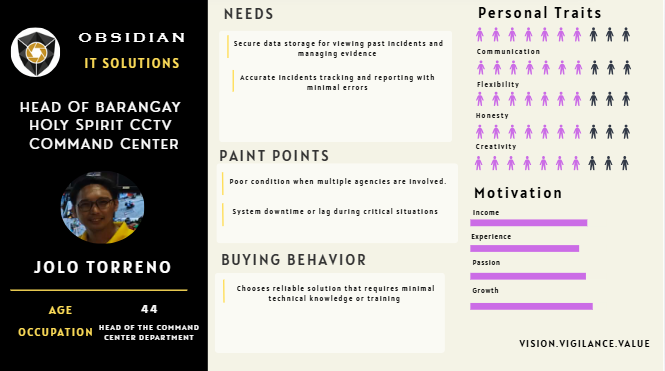
Figure 4. Customer Persona - Sir Jolo Torreno

Figure 5. Customer Persona - Ma'am Leila Versoza
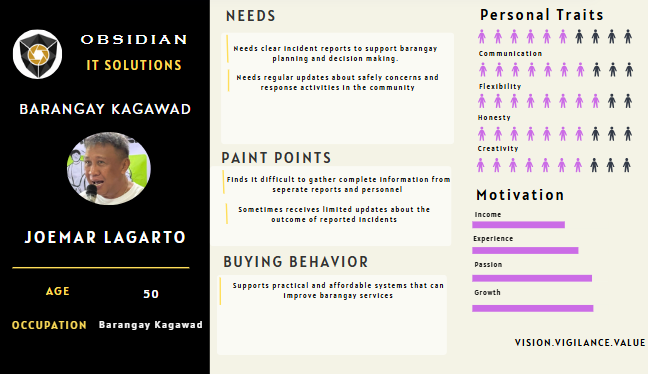
Figure 6. Customer Persona - Sir Joemar Lagarto
5.2 Interview Results
Validation interviews were conducted with a minimum of five (5) respondents representing key stakeholder roles at Barangay Holy Spirit Command Center, local business establishments, and community residents. The responses are summarized below:
Table 12. Interview Summary Table
| Respondents | Role/Stakeholder | Key Feedback | Interested? |
|---|---|---|---|
| Respondent 1 | Command Center Head | Highlighted that monitoring 200 cameras simultaneously causes operational fatigue. Expressed strong interest in AI-enabled alerts, threat-level categorization, and human verification controls to avoid false alarms triggering dispatch. | Yes |
| Respondent 2 | IT Department Staff | Emphasized system reliability, role-based access security, logs, and network bandwidth management. Welcomed a modular application layer that avoids replacing existing IP-based CCTV cameras and NVRs. | Yes |
| Respondent 3 | Barangay Tanod | Stated that phone calls and radio messages often lack clear location details. Welcomed the mobile app with GPS navigation, direct task assignments, and streamlined photo/report submission upon resolving incidents. | Yes |
| Respondent 4 | Local Business Owner | Expressed concerns about frequent loitering, petty theft, and fights disrupting public markets/establishments. Strongly approved of faster response coordination and localized emergency public announcements. | Yes |
| Respondent 5 | Community Resident | Shared concerns regarding community safety and late-night curfew enforcement. Supported the use of AI decision-support tools provided human operators remain fully in control of final public safety actions and announcements. | Yes |
5.3 Validation Findings
Key Positive Findings
Operational Alignment: SafeWatch follows the barangay’s existing chain of command by keeping incident verification, responder dispatch, and public announcements under authorized human control.
Improved Accountability: GPS-supported monitoring, structured incident statements, formal reports, and centralized records provide clearer documentation of incident response activities.
Infrastructure Compatibility: The modular design allows SafeWatch to use existing CCTV, network, and public-address infrastructure without requiring complete system replacement.
Common Concerns
AI Accuracy: False positives and missed detections may occur because of lighting, camera angles, crowding, weather, obstruction, and other environmental conditions.
Connectivity and Performance: Network interruptions, GPS availability, camera compatibility, and limited processing capacity may affect system performance.
System Usability: The PC and mobile interfaces must remain clear and responsive during incident review, dispatch, reporting, and other time-sensitive activities.
Overall Assessment
The validation process confirmed high overall interest and strong market demand among target users. Stakeholders validated that SafeWatch addresses real operational bottlenecks in continuous CCTV monitoring and fragmented response tracking. The core concept combining AI threat recommendations, human verification, GPS dispatch, and localized public announcements was enthusiastically received, provided that mobile connectivity issues and AI false-positive rates are systematically mitigated during prototype testing.
5.4 Recommended Improvements
Based on identified risks and planned prototype validation, the following improvements are recommended:
Connectivity and Data Recovery: Improve mobile connectivity handling through automatic reconnection and reliable data synchronization to reduce disruption to GPS updates, incident statements, and photo submissions during network interruptions.
Simplified Incident Review Interface: Keep the Command Center Personnel interface clear and responsive, with readable threat indicators, and efficient controls for confirming, rejecting, and monitoring AI detections and dispatches.
Optimized Selected-Feed Processing: Prioritize selected CCTV feeds and optimize AI processing to reduce server and network load before expanding to additional cameras.
Chapter 6. Lean Canvas
6.1 Problem
Continuous manual observation across approximately 200 CCTV cameras creates operator fatigue and makes it difficult to maintain equal attention across feeds, especially during simultaneous incidents, shift transitions, and busy periods.
Incident verification, responder coordination, location tracking, status updates, and reporting may be handled through separate processes, reducing efficiency and traceability.
Emergency announcements must be controlled and verified so that unverified AI detections do not trigger unnecessary public broadcasts.
An AI detection may remain unattended while Command Center personnel handle simultaneous monitoring, communication, and coordination duties, delaying an appropriate responder dispatch.
Validation basis: the Command Center Head identified monitoring fatigue; the Barangay Tanod identified unclear location details in phone/radio dispatch; the IT Department respondent emphasized reliability, access security, logs, and bandwidth; the business owner and resident supported faster coordination while retaining human control.
6.2 Customer Segments
Primary customer: Local government units, including barangays and city public-safety offices, with CCTV networks and defined response procedures.
Secondary customer: Gated communities, campuses, industrial estates, and other organizations managing security personnel and incident response.
Primary users: Command Center Personnel, IT Department Administrators, Purok Leaders, Barangay Tanods, and Barangay Task Force members.
Early-adopter profile: Organizations with existing CCTV and public-safety response workflows that still rely on manual monitoring or separate coordination tools.
6.3 Unique Value Proposition
“A controlled AI-assisted detection-to-response workflow that helps public-safety teams see possible incidents sooner, act within a configurable period, automatically dispatch appropriate responders when alerts remain unattended, document the full incident lifecycle, and issue separately authorized localized fire announcements without replacing functioning CCTV and public-address infrastructure.”
This value proposition preserves the approved balance: authorized personnel retain control over verification, final threat classification, manual actions, and public communication, while unattended detections follow the configured period and threat-level automatic-dispatch mapping.
6.4 Solution
Selected-feed AI detection with Level 1 Advisory, Level 2 Priority, and Level 3 Critical recommendations.
Command Center notification and a configurable period for review, verification, forwarding, or manual dispatch action.
Time-based automatic dispatch when an AI detection is not noticed within the configured period: the nearest and appropriate Barangay Tanods for Level 1 and Level 2, and the nearest and appropriate Barangay Task Force members for Level 3.
GPS-supported responder coordination, mobile status updates, incident statements, and formal reporting according to the assigned response workflow.
Central incident timeline plus separately verified and authorized localized announcements for confirmed fire incidents.
6.5 Channels
Direct institutional outreach to barangays, LGU public-safety offices, and other target organizations.
Live product demonstrations using the end-to-end detection-to-report workflow.
Professional/community networks, email outreach, referrals, and a product information page (proposed acquisition channels).
Deployment through configured PC and mobile applications connected to compatible CCTV, network, backend, GPS, and public-address resources.
6.6 Revenue Streams
Projected customer revenue consists of a ₱25,000 monthly platform subscription per active deployment and a ₱50,000 one-time deployment/configuration fee per new institutional customer. These rates are planning assumptions. The ₱3,604,624.21 initial project budget and ₱1,580,000 in estimated annual operational benefits are evaluated separately; neither is counted as customer revenue.
6.7 Cost Structure
Labor: ₱627,902.00, including the 10% contingency allowance in the initial project budget.
Hardware: ₱2,863,945.37, including the 10% contingency allowance in the initial project budget.
Software and services: ₱112,776.84, including the 10% contingency allowance in the initial project budget.
Total initial project cost baseline: ₱3,604,624.21. This is not a monthly operating cost or a selling price.
For operating projections, fixed costs are assumed at ₱30,000 per month and variable costs at ₱5,000 per active customer per month. These allowances exclude equipment and installation for additional deployments.
Installation, training, maintenance, technical support, and software updates are treated as separately scoped post-implementation services and are excluded from the operating projection.
6.8 Key Metrics
Approved initial project cost, actual expenditures, and contingency utilization.
Qualified institutional inquiries, demonstrations, pilot evaluations, paying customers, and continued use under an approved customer-payment model.
Incident workflow completion rate during testing: detection → configured-period result → manual or automatic dispatch → reporting.
AI false-positive/missed-detection rate and median time from alert to verified incident during controlled tests.
Estimated annual tangible benefits, cumulative benefits, ROI, and payback-period performance, measured separately from customer revenue.
Table 13. SafeWatch Lean Canvas
| Block | SafeWatch Summary |
|---|---|
| Problem | Monitoring fatigue across approximately 200 CCTV cameras; fragmented incident coordination and records; possible unattended AI alerts; need for separately authorized public announcements. |
| Customer Segments | Primary: LGUs, including barangays and city public-safety offices. Secondary: gated communities, campuses, and industrial estates. Users: Command Center Personnel, IT Department Administrators, Purok Leaders, Barangay Tanods, and Barangay Task Force members. |
| Unique Value Proposition | Controlled AI-assisted detection-to-response workflow with a configurable period, threat-based dispatch of unattended alerts, centralized reporting, and separately authorized localized fire announcements. |
| Solution | Selected-feed AI detection; three threat levels; Command Center review; automatic dispatch of Barangay Tanods for unattended Level 1 and Level 2 alerts and Barangay Task Force members for unattended Level 3 alerts; GPS/status and reporting; controlled fire announcements. |
| Channels | Direct institutional outreach, demonstrations, referrals, and configured PC and mobile applications. |
| Revenue Streams | Assumed ₱25,000 monthly platform subscription and ₱50,000 one-time deployment/configuration fee per new institutional customer. |
| Cost Structure | ₱3,604,624.21 initial project investment; assumed ₱30,000 monthly fixed and ₱5,000 per-customer variable operating allowances. |
| Key Metrics | Workflow completion, detection accuracy, alert-to-verification time, pilot results, paying customers, and cost performance. |
| Unfair Advantage | Barangay-specific detection-to-report workflow designed around the existing response roles and infrastructure; any durable advantage depends on tested performance and deployment learning. |
6.9 Unfair Advantage
SafeWatch is designed around a barangay-specific detection-to-report workflow that combines AI-assisted detection, three-level threat recommendations, authorized manual response, automatic dispatch for unattended alerts, responder GPS coordination, mandatory evidence and report submission, and separately authorized localized announcements while preserving existing infrastructure. Its long-term advantage will depend on deployment learning, stakeholder relationships, and accumulated workflow knowledge.
Chapter 7. Business Model
7.1 Business Model Overview
Obsidian IT Solutions will use a business-to-institution model centered on SafeWatch as a configurable public-safety platform. The initial customer focus is on LGUs and similar organizations that operate CCTV networks and need a more structured workflow for detection, verification, manual and automatic responder coordination, reporting, and controlled emergency communication. SafeWatch creates value by adding an AI-enabled application layer to the approved CCTV, network, processing, storage, GPS, and public-address environment.
The financial model assumes a ₱25,000 monthly platform subscription and a ₱50,000 one-time deployment/configuration fee per institutional customer. The ₱3,604,624.21 Barangay Holy Spirit implementation budget is analyzed separately from customer receipts. Estimated annual tangible benefits of ₱1,580,000 describe potential operational value, not sales revenue. Installation, training, preventive maintenance, technical support, and software updates are separately scoped services.
7.2 Value Proposition
SafeWatch helps public-safety organizations reduce the burden of continuously watching many CCTV feeds and reduce fragmentation between incident detection, verification, dispatch, tracking, reporting, and emergency communication. Its distinguishing value is not AI detection alone; it is the controlled end-to-end workflow in which AI recommends, authorized personnel may act during the configured period, unattended detections follow approved automatic-dispatch rules, responders receive actionable information, and incident evidence is recorded centrally. Public announcements remain separately verified and authorized.
7.3 Revenue Model
The revenue model combines a monthly platform subscription for continuing institutional use with a one-time deployment/configuration fee for each new customer. These are projected customer payments rather than contracted sales. The ₱3,604,624.21 initial implementation budget is treated separately from recurring platform operations.
Table 14. Revenue Model
| Revenue Model | What the customer pays for | Frequency | Business role |
|---|---|---|---|
| Platform subscription | Continuing use of a configured SafeWatch deployment | Monthly | Projected recurring income |
| Deployment/configuration fee | Initial configuration of a new institutional deployment | One-time | Projected one-time income |
Estimated operational benefits are not a revenue model or customer payment.
7.4 Customer Relationship
The proposed customer lifecycle is direct and service-supported: identify qualified institutions → conduct discovery and demonstration → confirm operational requirements and compatibility → configure and onboard authorized users → provide initial orientation and support → monitor issues and feedback → review performance and renewal needs. Customer feedback should be collected through structured check-ins and post-demo/pilot feedback, with technical issues routed into the development backlog. Retention depends on dependable operation, clear user workflows, responsive support, and demonstrated value in incident monitoring and documentation.
7.5 Key Partners and Resources
Table 15. Key Partners and Resources
| Partner / Resource | Type | Contribution to SafeWatch |
|---|---|---|
| Barangay Holy Spirit Command Center and public-safety personnel | Project stakeholders | Confirm incident-review, manual and automatic dispatch, reporting, and announcement procedures; participate in controlled validation. |
| Barangay Holy Spirit IT Department | Project stakeholder | Confirm authorized accounts, camera and network compatibility, access security, logs, and connectivity requirements. |
| Obsidian IT Solutions team | Internal resource | Develop, integrate, test, document, and improve the PC, mobile, AI, and backend components. |
| Existing CCTV, network, and public-address environment | Operational resource | Provide the infrastructure with which SafeWatch is intended to work, subject to compatibility and actual availability checks. |
| Processing, storage, and software resources in the project budget | Project resources | Support selected-feed analysis, incident records, system operation, and localized announcements, subject to approved procurement and deployment scope. |
Chapter 8. Minimum Viable Product (MVP)
8.1 MVP Description
The SafeWatch MVP is planned as the smallest testable version of the detection-to-response workflow: selected CCTV feed analysis → AI alert and threat recommendation → Command Center notice and review within the configured period, or automatic dispatch when the alert remains unnoticed → responder GPS and status updates → applicable incident statement or formal report → centralized incident record. Under the unattended-alert workflow, Level 1 and Level 2 detections dispatch the nearest and appropriate Barangay Tanods, while Level 3 detections dispatch the nearest and appropriate Barangay Task Force members. A confirmed fire announcement remains separate from responder dispatch and requires Command Center verification and authorization.
These planned functions address monitoring fatigue, unclear dispatch locations, and fragmented records identified during customer validation. MVP testing will evaluate end-to-end operation and role controls before deployment.
8.2 Features Included
Table 16 defines the planned MVP functions and links each function to an operational need.
Table 16. MVP Features Included
| Feature | Purpose / User Need | Status |
|---|---|---|
| Authentication and role permissions | Protects authorized accounts and separates Command Center, IT Department Administrator, Purok Leader, Barangay Tanod, and Barangay Task Force functions. | Planned for MVP |
| AI detection | Analyzes selected CCTV feeds for configured categories, including fighting or aggressive behavior, loitering, curfew-related situations, fire, and smoke. | Planned for MVP |
| Three-level threat recommendation | Recommends Level 1 Advisory, Level 2 Priority, or Level 3 Critical for review and unattended-alert routing. | Planned for MVP |
| AI detection unattended workflow | Notifies the Command Center and applies the configurable period before automatic dispatch when the alert is not noticed. | Planned for MVP |
| Responder dispatch + GPS/status | Supports manual dispatch and threat-based automatic dispatch, location visibility, status updates, and response coordination. | Planned for MVP |
| Mobile statements and reports | Requires Barangay Tanod incident statements and photos, Purok Leader formal reports after the applicable Tanod workflow, and Barangay Task Force formal reports for their assigned incidents. | Planned for MVP |
| Central incident timeline | Stores detections, configured-period application, verification, manual or automatic dispatch, GPS, status, reporting, and announcement activity. | Planned for MVP |
| Localized fire announcement | Prepares the approved prerecorded message and speaker zone for separate Command Center verification and authorization. | Planned for MVP |
8.3 Product Roadmap
Table 17. Product Roadmap
| Stage | Target Focus | Planned Deliverables | Validation Goal |
|---|---|---|---|
| MVP / Version 1.0 | Selected-feed detection-to-report workflow | Role-based login; selected CCTV feed analysis; threat recommendations; configured response period; manual and automatic dispatch; GPS/status; mobile reporting; central timeline; separately authorized fire announcements | Confirm end-to-end workflow, threat-level routing, permissions, and speaker separation |
| Version 1.1 | Reliability and usability | Automatic reconnection/data sync; simplified incident review and countdown display; error handling; performance tuning | Reduce disruption and operator confusion |
| Version 2.0 | Broader integration and controlled audio | Additional compatible camera feeds; optimized processing; additional speaker zones; improved route estimation; broader reporting/administration | Test scalability, compatibility, and operational readiness |
| Future expansion | Market adaptation | Configurations for additional barangays, gated communities, campuses, industrial estates, and other qualified users | Validate demand and customization requirements |
8.4 Screenshots / Prototype
Figure 3 in Chapter 3 depicts the SafeWatch physical prototype assembly. It illustrates the CCTV and public-address hardware concept, while the PC, mobile, AI, and backend workflows described above remain the scope of MVP implementation and testing.
Chapter 9. Marketing Plan
Marketing for SafeWatch should be treated as institutional outreach rather than mass-market consumer advertising. Potential customers include LGUs, barangays, city public-safety offices, gated communities, campuses, industrial estates, and other organizations with defined security and response procedures. Adoption will depend on operational need, budget, approval, compatibility, procurement, and data-privacy requirements.
The initial marketing objective is to demonstrate the complete SafeWatch workflow, support controlled pilot evaluation, document stakeholder feedback, and use verified operational results to guide future implementation discussions.
9.1 Target Market
Table 18. SafeWatch Target-Market Profile
| Attribute | SafeWatch Target-Market Profile |
|---|---|
| Primary organizations | Local government units, including barangays and city public-safety offices, with CCTV and response functions |
| Secondary organizations | Gated communities, campuses, industrial estates, and other security-managed organizations |
| Initial geographic focus | Barangay Holy Spirit as the initial implementation site; nearby institutions as first projected commercial targets |
| Users | Command Center Personnel, IT Department Administrators, Purok Leaders, Barangay Tanods, Barangay Task Force members, and authorized officials |
| Decision-makers | Barangay/LGU officials, public-safety administrators, and IT/operations decision-makers according to each organization’s procurement structure |
| Key needs | More structured monitoring, incident verification, responder coordination, GPS-supported dispatch, reporting, and controlled emergency communication |
| Adoption indicator | Existing CCTV infrastructure plus recurring monitoring/response coordination pain |
9.2 Market Segmentation
Table 19. Market Segmentation
| Segmentation Basis | Segment | Marketing Implication |
|---|---|---|
| Firmographic | Barangays and LGU public-safety offices with existing CCTV networks | Lead with infrastructure enhancement, operational coordination, and controlled AI |
| Firmographic | Security-managed gated communities/campuses/industrial estates | Emphasize incident workflow, responder coordination, reporting, and configurable roles |
| Geographic | Initial local/nearby institutions | Prioritize in-person demonstrations and nearby onboarding/support |
| Psychographic | Organizations open to practical digital transformation but cautious about autonomous AI | Emphasize human-in-the-loop control, auditability, and existing-infrastructure-first design |
| Behavioral | Organizations using manual CCTV review and phone/radio coordination | Demonstrate reduced monitoring burden and clearer location/reporting workflows |
9.3 Pricing Strategy
The ₱3,604,624.21 initial project cost baseline includes labor, hardware, software and services, and 10% contingency. For operating projections, SafeWatch assumes a ₱25,000 monthly platform subscription, ₱50,000 one-time deployment/configuration fee, ₱5,000 monthly variable cost per active customer, and ₱30,000 monthly fixed cost. A separate cost-plus illustration prices one complete implementation at ₱3,965,086.63, or 10% above the project cost baseline; it is excluded from the subscription forecast. These figures are planning assumptions, not customer agreements.
Table 20. Pricing Strategy
| Pricing Input | Amount / Basis | Evidence / Status |
|---|---|---|
| Initial project cost baseline | ₱3,604,624.21 for Barangay Holy Spirit | PROJMAN cost baseline; separate from customer prices |
| Proposed platform subscription | ₱25,000 per deployment per month | Planning rate for the operating forecast |
| Proposed deployment/configuration fee | ₱50,000 per new deployment | Planning rate per modeled new deployment; site equipment and installation excluded |
| Alternative proposed complete implementation price | ₱3,965,086.63, or ₱3,604,624.21 plus 10% | Separate cost-plus illustration for complete implementation; excluded from subscription forecast |
| Proposed variable operating cost | ₱5,000 per active customer per month | Operating allowance used in the forecast; site-specific capital costs excluded |
| Proposed fixed operating cost | ₱30,000 per month | Operating allowance used in the forecast |
| Proposed sales volume | New customers in Months 1, 3, 5, and 7 | Illustrative Year 1 acquisition schedule |
At the assumed subscription rate, contribution before fixed costs is ₱25,000 − ₱5,000 = ₱20,000 per active customer per month. With two active customers, ₱50,000 in recurring revenue less ₱40,000 in modeled fixed and variable costs leaves a ₱10,000 monthly operating surplus. The calculation excludes initial implementation and customer-specific equipment and installation costs, so it does not represent full deployment profit.
9.4 Promotion Strategy
Table 21. Promotion Strategy
| Channel / Activity | Purpose | Why It Fits SafeWatch Target | Proposed KPI / CTA |
|---|---|---|---|
| Institutional demonstration | Show the end-to-end detection-to-report workflow | Decision-makers need to understand the operational workflow, not just AI features | Demo bookings; CTA: schedule an operational demonstration |
| Direct email / formal outreach | Open conversations with qualified organizations | Institutional customers are reached through structured communication | Reply rate; meetings booked |
| Professional/community social content | Build credibility and explain the controlled manual and automatic workflow | Supports awareness among decision-makers and technical stakeholders | Qualified inquiries |
| Referral / network introductions | Reduce trust barrier for institutional software | Security/public-safety purchasing is relationship-sensitive | Referral leads |
| Pilot or controlled evaluation offer | Reduce adoption risk and validate compatibility | Controlled validation is required before wider deployment | Pilot evaluation and documented stakeholder feedback |
9.5 Distribution Channels
SafeWatch will be delivered as a configured system implementation that combines the PC and mobile applications with the approved processing, storage, camera, networking, backend, mapping, and public-address resources. After deployment approval, Obsidian IT Solutions will configure authorized accounts and roles, connect compatible CCTV camera feeds, configure incident categories, the automatic-dispatch period, responder routing, reporting, and speaker zones, and orient authorized users. Command Center and IT Administration functions are accessed through PC applications, while Purok Leader, Barangay Tanod, and Barangay Task Force functions are accessed through mobile applications. The implementation uses Windows Server 2025 Standard, Supabase Pro, YOLOv26, and OpenStreetMap API together with the approved hardware environment.
Chapter 10. Operations Plan
10.1 Organizational Structure
The startup has five members with the functional assignments and named members shown in Table 23. The Project / Business Lead coordinates project direction, business planning, milestones, stakeholder communication, budget, and approvals. The Technical / AI Lead, Backend / Integration Lead, Mobile / QA Lead, and Marketing / Finance / Operations Lead carry out the functions described in the table.
Table 22. Proposed SafeWatch Organizational Structure
| Coordination | Functional leads |
|---|---|
| Project / Business Lead — Denver Sanchez | Technical / AI Lead — John Carlo Andam; Backend / Integration Lead — Merl Angelo Dela Pena; Mobile / QA Lead — Cyrus Jeshurun Jacob Baconawa; Marketing / Finance / Operations Lead — Benedict Ilio |
Table 23. Organizational Structure and Functional Roles
| Functional Role | Core Accountability | Assigned Member |
|---|---|---|
| Project / Business Lead | Project direction, business planning, priorities, milestones, stakeholder communication, budget monitoring, approvals, and overall coordination | Denver Sanchez |
| Technical / AI Lead | System architecture, CCTV camera feed AI detection, threat-level recommendations, PC technical implementation, AI evaluation, and technical records | John Carlo Andam |
| Backend / Integration Lead | Backend services, database, authentication, APIs, notifications, configurable-period processing, dispatch logic, GPS, mapping, and system integrations | Merl Angelo Dela Pena |
| Mobile / QA Lead | Mobile applications, role-based workflows, GPS and response functions, interface quality, functional testing, integration testing, and defect documentation | Cyrus Jeshurun Jacob Baconawa |
| Marketing / Finance / Operations Lead | Institutional outreach, marketing materials, financial records, budget coordination, operational planning, project materials, user guidance, and submission coordination | Benedict Ilio |
10.2 Team Roles
The following responsibilities correspond to the five functional roles listed in Section 10.1.
Table 24. Team Roles
| Role | Primary Responsibilities | Expected Deliverables |
|---|---|---|
| Project / Business Lead | Prioritize project scope; coordinate milestones; manage stakeholder communication; oversee business and operational priorities; and monitor the budget, risks, changes, testing progress, and approvals | Milestone plan, stakeholder records, business and operational priorities, budget and status reports, and approved project decisions |
| Technical / AI Lead | Design the system architecture; develop and evaluate CCTV camera feed AI detection and threat-level recommendations; support the Command Center and IT Administrator PC functions; and maintain technical implementation records | AI detection module, system architecture, PC technical components, AI evaluation results, implementation records, and technical notes |
| Backend / Integration Lead | Develop the centralized backend, database, authentication, APIs, notifications, configurable response period, manual and automatic dispatch logic, GPS and mapping connections, system integrations, and incident audit records | Backend services, database structure, APIs, integration components, dispatch-processing results, synchronization results, and technical logs |
| Mobile / QA Lead | Develop mobile functions for Purok Leaders, Barangay Tanods, and Barangay Task Force members; implement GPS, assignments, response statuses, incident statements, photos, and formal reporting; and perform functional and integration testing | Working mobile application components, role-based mobile workflows, test cases, testing results, defect records, and quality-assurance summary |
| Marketing / Finance / Operations Lead | Prepare institutional outreach and presentation materials; maintain cost, benefit, and budget records; coordinate operational resources; and prepare project documentation, user guidance, turnover records, and formal submissions | Marketing and presentation materials, financial records, resource and operations plan, project documents, user materials, and turnover package |
10.3 Development Workflow
SafeWatch should use an iterative development workflow in which validated customer needs are converted into prioritized work, developed in small increments, tested against the documented risks, and returned to the backlog for improvement. Planned validation focuses on authentication, permissions, AI detection, incident verification, configured-period processing, manual and automatic dispatch, GPS, notifications, status changes, reporting, and separate public-announcement authorization.
Table 25. Development Workflow
| Step | Activity | SafeWatch Example |
|---|---|---|
| 1. Validate | Collect and confirm user need | Interview feedback: monitoring fatigue, unclear dispatch location, reliability/security requirements |
| 2. Plan | Prioritize the next sprint/work package | CCTV camera feed AI, verification UI, GPS/reporting, or connectivity recovery |
| 3. Build | Implement the selected features | Develop PC/mobile/backend components |
| 4. Test | Run functional, simulated-incident, usability, and integration tests | Measure false positives, missed detections, delays, permissions, compatibility, and performance |
| 5. Improve | Fix defects and update backlog | Simplify interface, improve reconnection/data sync, optimize processing |
10.4 Resources Required
Table 26. Resources Required
| Resource Category | Specific Resource | Purpose | Availability / Source |
|---|---|---|---|
| Human | IT Project Manager, Full-Stack Web and UI/UX Developer, Junior QA Tester, Hardware Engineer, and Software Engineer | Plan, build, test, integrate, document, and coordinate SafeWatch | ₱627,902.00 allocated in the initial project budget, including contingency |
| Software and Services | Windows Server 2025 Standard, Supabase Pro, YOLOv26, and OpenStreetMap API | Server operation, database and backend services, AI detection, GPS, and mapping | ₱112,776.84 allocated in the initial project budget, including contingency |
| Processing Hardware | ASUS motherboard, AMD Ryzen 7 processor, 32GB RAM, RTX 4090 GPU, power supply, and AVR | AI processing, application operation, and electrical protection | Included in the ₱2,863,945.37 hardware budget as planned procurement |
| CCTV / Storage | 200 Hikvision IP cameras, 13 Hikvision NVRs, and ten 8TB NAS hard drives | CCTV coverage, recording, storage, and selected-feed AI processing | Budgeted in the hardware allocation for initial implementation |
| Network | Hikvision Gigabit Smart PoE switch and the existing network environment | Camera connectivity, backend and client communication, notifications, and GPS data exchange | Switch included in the hardware budget; compatibility evaluated during integration |
| Public Address | 50 ITC Public Address System units | Localized announcements for confirmed fire incidents | Budgeted in the hardware allocation; configured for verified fire announcements |
| Budget | Labor, hardware, software and services, and category-level contingency | Fund the initial SafeWatch implementation | ₱3,604,624.21 initial implementation budget including 10% contingency |
10.5 Risk Management
Table 27. Risk Management
| Risk | Possible Impact | Likelihood | Mitigation/ Response |
|---|---|---|---|
| AI false positives / missed detections | False alarms or missed incidents may reduce trust and response quality | High | Calibrate on CCTV camera feeds; apply confidence thresholds and the configured response period; test noticed and unattended cases; preserve separate human authorization for announcements |
| Connectivity interruption / GPS loss | Interrupted location updates, reporting, or notifications | High | Automatic reconnection; local retry/synchronization; visible stale-location indicators; test degraded-network behavior |
| Camera compatibility / processing capacity | CCTV camera feeds AI may fail or overload available resources | High | Start with limited feeds; verify camera/NVR compatibility; benchmark processing before expansion |
| Cybersecurity / privacy incident | Unauthorized access or disclosure of incident/security data | Medium | Role-based access, secure authentication, least-privilege access, logs, backups, and documented incident handling |
| Usability during incidents | Slow or confusing UI may delay verification/dispatch | Medium | Simplified incident review; readable threat indicators; task-focused screens; usability testing |
| Procurement / budget constraints | Price changes or unavailable resources may affect the approved implementation | High | Use the approved cost baseline and contingency allowances; confirm supplier specifications; apply formal change control to material cost or scope changes |
| Team member unavailability | Development or operations delays | Medium | Document work, share access responsibly, cross-train critical tasks |
| Low customer adoption or pricing mismatch | Projected receipts may fall below modeled operating costs or implementation needs | Medium | Use institutional demonstrations and pilot feedback to refine price, scope, and acquisition targets. |
The likelihood ratings are qualitative planning judgments informed by customer feedback and the technical risks identified in Chapters 4 and 5. The principal risks concern AI accuracy, connectivity and performance, camera compatibility, processing capacity, and usability.
Chapter 11. Financial Assumptions and Evidence
The financial analysis separates the ₱3,604,624.21 Barangay Holy Spirit initial project budget, ₱1,580,000 in estimated annual operational benefits, and projected institutional customer payments. Operational benefits are not sales receipts. Tables 28–34 apply explicit assumptions to illustrate subscription revenue, operating costs, cash flow, and scenarios.
Table 28. Financial Assumptions and Evidence
| Financial Assumption | Value | Basis / Evidence |
|---|---|---|
| Pre-contingency project cost | ₱3,276,931.10 | Sum of PROJMAN labor, hardware, and software and services subtotals |
| Total contingency allowance | ₱327,693.11 | 10% of the three PROJMAN category subtotals |
| Initial project cost baseline | ₱3,604,624.21 | PROJMAN Sections 2.4 and 6.3; repeated project cost baseline |
| Estimated annual tangible benefits | ₱1,580,000.00 | PROJMAN preliminary estimate; excluded from customer receipts |
| Three-year cumulative estimated benefits | ₱4,740,000.00 | Assumes estimated annual benefits recur for three years |
| Proposed platform subscription | ₱25,000 per active deployment per month | Planning rate for modeled institutional customers |
| Proposed deployment/configuration fee | ₱50,000 per new deployment | Planning fee for modeled new customers |
| Proposed variable operating cost | ₱5,000 per active customer per month | Monthly operating allowance used in the forecast |
| Proposed fixed operating cost | ₱30,000 per month | Monthly operating allowance used in the forecast |
| Proposed new-customer timing | One in each of Months 1, 3, 5, and 7 | Illustrative Year 1 customer-acquisition schedule |
| Alternative complete implementation price | ₱3,965,086.63 | 10% cost-plus illustration for complete implementation; excluded from subscription forecast |
Sections 11.2–11.7 use the subscription-and-fee model for a 12-month operating projection. Initial implementation investment, equipment and installation for additional customer sites, taxes, and financing are outside this operating model. Project investment recovery is assessed separately using the estimated annual operational benefits.
11.1 Startup Cost
Table 29 presents PROJMAN’s initial resource budget for a SafeWatch implementation in Barangay Holy Spirit. For this analysis, the ₱3,604,624.21 total serves as the initial project investment, separate from monthly platform operating costs.
Table 29. Startup Cost
| One-Time Item | Amount | Basis / Evidence | Classification |
|---|---|---|---|
| Labor | ₱627,902.00 | ₱570,820.00 subtotal plus ₱57,082.00 contingency | Initial project budget |
| Hardware | ₱2,863,945.37 | ₱2,603,586.70 subtotal plus ₱260,358.67 contingency | Initial project budget |
| Software and Services | ₱112,776.84 | ₱102,524.40 subtotal plus ₱10,252.44 contingency; annual Supabase amount implied by the subtotal | Initial project budget |
| Total Initial Project Cost | ₱3,604,624.21 | ₱3,276,931.10 pre-contingency cost plus ₱327,693.11 contingency | Initial project investment benchmark |
Total Initial Project Cost = ₱627,902.00 + ₱2,863,945.37 + ₱112,776.84 = ₱3,604,624.21. The category totals include 10% contingency and agree arithmetically. The software subtotal of ₱102,524.40 implies ₱18,824.40 for 12 months of Supabase Pro at ₱1,568.70 per month, plus the ₱83,700.00 Windows Server license; the printed Supabase line of ₱4,714.50 is inconsistent with that 12-month term. The analysis uses PROJMAN’s repeated ₱3,604,624.21 cost baseline.
The labor allocation covers the IT Project Manager, Full-Stack Web and UI/UX Developer, Junior QA Tester, Hardware Engineer, and Software Engineer for the planned project period. The hardware allocation covers processing components, an AVR, PoE switch, hard drives, NVRs, 200 IP cameras, and 50 public-address units. The software and services allocation covers Windows Server 2025 Standard, Supabase Pro, YOLOv26, and OpenStreetMap API. The 10% contingency is already included and must not be added again.
For planning, ₱3,604,624.21 is the startup investment benchmark for the initial implementation. The operating cash projection in Section 11.6 begins after this investment and therefore does not include the initial project outlay.
11.2 Revenue Streams
Table 30 applies the assumed subscription and deployment/configuration prices to institutional customers. The figures describe projected customer payments and exclude the separate complete-implementation price.
Table 30. Revenue Streams
| Revenue Stream | Payer | Price / Fee | Frequency | Projected Volume | Computation |
|---|---|---|---|---|---|
| Platform subscription | Institutional customer | Assumed ₱25,000 per deployment per month | Monthly | 1–4 active customers in the Year 1 projection | Monthly revenue = ₱25,000 × active paying customers |
| Deployment/configuration fee | New institutional customer | Assumed ₱50,000 per new deployment | One-time | Four modeled new customers in Year 1 | Year 1 fee revenue = ₱50,000 × 4 = ₱200,000 |
Under the 12-month acquisition scenario, 36 active-customer months generate ₱900,000 in subscription revenue and four deployment/configuration fees generate ₱200,000, for ₱1,100,000 in projected receipts. These are forecasts rather than executed sales. The ₱1,580,000 in estimated annual operational benefits is excluded from revenue.
11.3 Cost Structure
The ₱3,604,624.21 initial implementation budget is a one-time project investment. The monthly model assumes fixed operating costs of ₱30,000 and variable costs of ₱5,000 per active customer. It excludes equipment, installation, and other site-specific costs for additional deployments; accordingly, its operating results are not full project profit.
Table 31. Cost Structure
| Cost Type | Component | Monthly Amount / Unit | Treatment |
|---|---|---|---|
| Fixed | Operating allowance | Proposed ₱30,000 per month | Held constant across the illustrated customer range |
| Variable | Active-customer operating allowance | Proposed ₱5,000 per active customer per month | Applied per active paying customer in the operating projection |
| One-time | Initial SafeWatch implementation | ₱3,604,624.21 project baseline | Initial project investment, excluded from monthly operating allowances |
| One-time / customer | Additional deployment cost | Outside recurring model | Site-specific equipment and installation treated as separate project costs |
At two active customers, modeled monthly operating cost is ₱30,000 + (2 × ₱5,000) = ₱40,000. Hardware is the largest component of the initial implementation budget. The recurring allowance rises by ₱5,000 per additional customer within the assumed range, while separately scoped support, renewals, replacement, installation, and training are outside this operating illustration.
11.4 Sales Forecast
The 12-month forecast assumes ₱25,000 per active customer per month, ₱50,000 per new customer, ₱5,000 per active customer per month in variable cost, and ₱30,000 per month in fixed cost. It models one new institutional customer in Months 1, 3, 5, and 7. This is an illustrative acquisition projection rather than a record of contracts. The separate ₱3,965,086.63 complete-implementation price is excluded.
Table 32. Sales Forecast
| Month | Active Customers | New Customers | Revenue | Variable Cost | Fixed Cost | Modeled Operating Surplus/(Deficit) | Basis |
|---|---|---|---|---|---|---|---|
| 1 | 1 | 1 | ₱75,000 | ₱5,000 | ₱30,000 | ₱40,000 | Proposed ramp |
| 2 | 1 | 0 | ₱25,000 | ₱5,000 | ₱30,000 | (₱10,000) | Proposed ramp |
| 3 | 2 | 1 | ₱100,000 | ₱10,000 | ₱30,000 | ₱60,000 | Proposed ramp |
| 4 | 2 | 0 | ₱50,000 | ₱10,000 | ₱30,000 | ₱10,000 | Proposed ramp |
| 5 | 3 | 1 | ₱125,000 | ₱15,000 | ₱30,000 | ₱80,000 | Proposed ramp |
| 6 | 3 | 0 | ₱75,000 | ₱15,000 | ₱30,000 | ₱30,000 | Proposed ramp |
| 7 | 4 | 1 | ₱150,000 | ₱20,000 | ₱30,000 | ₱100,000 | Proposed ramp |
| 8 | 4 | 0 | ₱100,000 | ₱20,000 | ₱30,000 | ₱50,000 | Proposed ramp |
| 9 | 4 | 0 | ₱100,000 | ₱20,000 | ₱30,000 | ₱50,000 | Proposed ramp |
| 10 | 4 | 0 | ₱100,000 | ₱20,000 | ₱30,000 | ₱50,000 | Proposed ramp |
| 11 | 4 | 0 | ₱100,000 | ₱20,000 | ₱30,000 | ₱50,000 | Proposed ramp |
| 12 | 4 | 0 | ₱100,000 | ₱20,000 | ₱30,000 | ₱50,000 | Proposed ramp |
| Year 1 total | 36 active-customer months | 4 | ₱1,100,000 | ₱180,000 | ₱360,000 | ₱560,000 | Projection totals |
Projected Year 1 receipts comprise ₱900,000 in subscriptions and ₱200,000 in deployment/configuration fees. Under the assumed operating allowances, Month 2 shows a ₱10,000 deficit and Month 3 onward shows positive monthly surpluses. The ₱560,000 Year 1 operating surplus precedes the ₱3,604,624.21 initial investment and any additional deployment costs, so it is not net project profit.
11.5 Break-even Analysis
Using the recurring operating assumptions:
Contribution Margin per Active Customer = ₱25,000 − ₱5,000 = ₱20,000 per month.
Operating Break-even Quantity = ₱30,000 ÷ ₱20,000 = 1.5 customers. Rounded up, the conditional operating break-even point is 2 active paying customers per month.
Operating Break-even Sales Revenue = 2 × ₱25,000 = ₱50,000 in recurring monthly revenue, excluding one-time deployment/configuration fees.
At two customers, ₱50,000 in recurring revenue less ₱10,000 in variable costs and ₱30,000 in fixed costs leaves a ₱10,000 monthly modeled surplus; two customers are needed because the algebraic threshold is 1.5. The acquisition projection reaches that level in Month 3. This operating break-even excludes initial investment and additional deployment costs. Separately, PROJMAN’s preliminary gross-benefit calculation implies 2.28-year project payback and 31.50% three-year ROI before recurring operating costs, if the ₱1,580,000 estimated annual benefits recur.
11.6 Cash Flow Projection
The operating cash projection assumes ₱30,000 opening cash, equivalent to one month of modeled fixed costs, and same-month collection and payment. It begins after initial implementation and includes only subscription and deployment/configuration receipts and monthly operating allowances. It excludes initial project investment, additional site costs, taxes, and financing flows.
Table 33. Cash Flow Projection
| Month | Beginning Cash | Cash Inflows | Cash Outflows | Net Cash Flow | Ending Cash |
|---|---|---|---|---|---|
| 1 | ₱30,000 | ₱75,000 | ₱35,000 | ₱40,000 | ₱70,000 |
| 2 | ₱70,000 | ₱25,000 | ₱35,000 | (₱10,000) | ₱60,000 |
| 3 | ₱60,000 | ₱100,000 | ₱40,000 | ₱60,000 | ₱120,000 |
| 4 | ₱120,000 | ₱50,000 | ₱40,000 | ₱10,000 | ₱130,000 |
| 5 | ₱130,000 | ₱125,000 | ₱45,000 | ₱80,000 | ₱210,000 |
| 6 | ₱210,000 | ₱75,000 | ₱45,000 | ₱30,000 | ₱240,000 |
| 7 | ₱240,000 | ₱150,000 | ₱50,000 | ₱100,000 | ₱340,000 |
| 8 | ₱340,000 | ₱100,000 | ₱50,000 | ₱50,000 | ₱390,000 |
| 9 | ₱390,000 | ₱100,000 | ₱50,000 | ₱50,000 | ₱440,000 |
| 10 | ₱440,000 | ₱100,000 | ₱50,000 | ₱50,000 | ₱490,000 |
| 11 | ₱490,000 | ₱100,000 | ₱50,000 | ₱50,000 | ₱540,000 |
| 12 | ₱540,000 | ₱100,000 | ₱50,000 | ₱50,000 | ₱590,000 |
With these assumptions, net cash flow totals ₱560,000 and ending operating cash reaches ₱590,000 after 12 months. Month 2 shows a ₱10,000 net outflow because no deployment/configuration fee is received. Delayed collections or expenses outside the modeled allowances would reduce the projected balance.
11.7 Scenario Analysis
The scenarios vary active paying customers while holding the assumed monthly subscription of ₱25,000, variable allowance of ₱5,000 per customer, and fixed allowance of ₱30,000 constant. They exclude one-time deployment/configuration fees and initial project investment.
Table 34. Scenario Analysis
| Scenario | Active Customers | Recurring Revenue | Variable Cost | Contribution Margin | Fixed Cost | Modeled Operating Surplus/(Deficit) | Assumption |
|---|---|---|---|---|---|---|---|
| Conservative | 1 | ₱25,000 | ₱5,000 | ₱20,000 | ₱30,000 | (₱10,000) | Slower acquisition |
| Expected | 2 | ₱50,000 | ₱10,000 | ₱40,000 | ₱30,000 | ₱10,000 | Two active customers |
| Optimistic | 4 | ₱100,000 | ₱20,000 | ₱80,000 | ₱30,000 | ₱50,000 | Faster acquisition |
Each additional active customer adds ₱20,000 in modeled monthly contribution before fixed costs. One customer produces a monthly operating deficit, while two and four produce surpluses under the stated allowances. The two-customer Expected scenario represents an early operating benchmark; the four-customer Optimistic scenario corresponds to Months 7–12 of the acquisition forecast. Results remain sensitive to actual pricing, collections, and site-specific costs.
References
[1] Milestone Systems A/S, “XProtect Video Management Software.” [Online]. Available: https://www.milestonesys.com/products/software/xprotect/. Accessed: Aug. 31, 2026.
[2] Genetec Inc., “Mission Control Incident Management System.” [Online]. Available: https://www.genetec.com/products/operations/mission-control. Accessed: Aug. 31, 2026.
[3] Avigilon, “Unity On-Premise Video Security.” [Online]. Available: https://www.avigilon.com/vms/on-premise. Accessed: Aug. 31, 2026.
[4] Hangzhou Hikvision Digital Technology Co., Ltd., “HikCentral Professional Integration.” [Online]. Available: https://tpp.hikvision.com/products/HCP-Integration. Accessed: Aug. 31, 2026.